


Establishing and verifying user identities to meet compliance obligations and enable secure interactions across the platform. Identity management includes onboarding, Know Your Customer (KYC) / Anti-Money Laundering (AML) checks, and ongoing exception monitoring, while also supporting user authentication and permissioning across services. Leveraging technologies such as biometrics, verifiable credentials, and decentralized identifiers (DIDs), the platform balances regulatory compliance with user privacy and interoperability in both Web2 and Web3 environments.

“Tokenization” or digitization of real-world assets to represent ownership rights and claims is a central tenet of the Zult platform. Zult uses different token standards depending on the type of tokenized asset. Currently Zult issues ERC 20 tokens for Zult Prime and ERC 3643 tokens for Private Zult tokens.

Zult platform provides integration with several well-known Web 3 wallets as well as fiat currency on-boarding and off-boarding rails.
Key features include:

Provides a data enabled environment that can support decision-making by extracting actionable insights and provide real time market intelligence. This includes aggregating structured and unstructured data from internal systems, user behavior, and external sources such as blockchain networks and market feeds. Advanced analytics, machine learning, and visualization tools empower teams to identify trends, assess risks, and optimize strategies across product, compliance, and investment functions.

Zult.io provides flexible and secure custody and key management solutions tailored to the needs of our customers. Our infrastructure supports both custodial and non-custodial models to accommodate varying risk profiles and operational preferences.

At Zult.io, compliance is not an afterthought. It is embedded at every stage of the value chain lifecycle. From investor onboarding to ongoing asset servicing, our platform ensures that regulatory obligations are automatically enforced through intelligent design and blockchain-native mechanisms.

A suite of administrative tools that ensures transparent operations, effective management, and smart contract execution. These tools support core functions such as Net Asset Value (NAV) calculation, investor reporting, compliance monitoring, and automated capital calls or distributions. By integrating on-chain data with traditional fund operations, the platform ensures trust, auditability, and operational efficiency for both conventional and tokenized investment vehicles.


Zult.io allows administrators to tokenize real-world assets, define investment terms, and publish offers to attract investors. The platform supports fractional ownership and facilitates seamless management of investment offers. Our integrated approach includes compliance by design within offers.
The listings module has several features:

Zult.io enables asset managers to unlock liquidity by orchestrating distribution across a network of regulated and blockchain-native channels. While Zult does not operate its own ATS, we integrate with:
Our orchestration layer connects tokenized assets to the right venues based on investor type, jurisdiction, and asset class.

Zult.io manages the integrity of trading, provides liquidity, and maintains asset tokenization across the platform. This includes overseeing the deployment and management of smart contracts for trading, rebalancing, and compliance, while ensuring fair pricing through integration with oracles and market data feeds. Market operations also involve coordinating liquidity strategies, such as market making and maintaining the accurate representation of real-world assets on-chain to support continuous, trusted fund activity.

Zult.io facilitates the execution of transactions by ensuring that assets are accurately transferred using smart contracts and payments are finalized. Blockchain-based clearing automates the reconciliation process and enables atomic settlement. The transfer of assets and payment occurs simultaneously thereby minimizing counterparty risk. By leveraging decentralized ledgers, this process ensures transparency, auditability and real-time settlement.
Faster capital formation, secondary liquidity optionality, and seamless B2B/B2C engagement. Real results powered by Zult’s tokenization and routing engine.

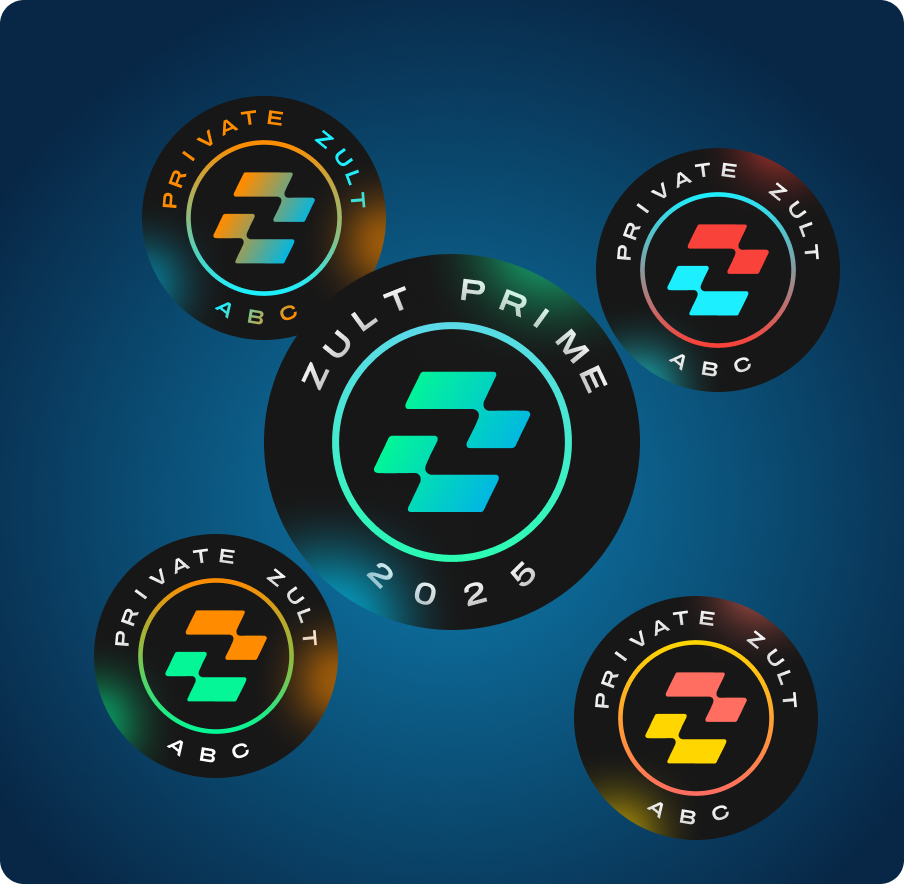
There are two types of types of tokens within the Zult system.
Zult Prime and Private Zults.

The concept of a reinvestment fund is still being developed. It will be managed by a qualified investment company that will make investments within the Zult ecosystem.

Zult promotes transparency and decentralized autonomy through its Governance module. The platform provides the ability to submit governance proposals through the platform. Voting results can be transparent on anonymized depending on the objectives. Proposals may be executed via smart contracts.